Puzzle Board or Puzzle Mat: Which Is Better? (November 2026)
In the puzzle board vs mat choice, pick a board for a firm surface and flat storage; pick a mat for roll-up storage. Choose around the space you can spare between sessions.
On this page (12 sections)
- Puzzle board vs mat: what is the main difference?
- Which is easier to store between sessions?
- Which keeps loose pieces easier to manage?
- Is a board or mat more comfortable to work on?
- Which should you choose for a larger puzzle?
- Does a puzzle board or mat travel better?
- Who should buy the ALL4JIG board, and who should skip it?
- Which roll-up mat suits your routine?
- How do you set up and pack away a puzzle mat?
- How should you care for a board or mat?
- What mistakes should you avoid before buying?
- Puzzle board vs mat: which should you choose?
Choose a puzzle board for flat support and a puzzle mat for roll-up storage. The puzzle board vs mat decision starts with where your unfinished project will go when you need the table back.
A board keeps its shape during storage, so you need space for the whole rectangle. A mat wraps around a core, trading a smaller storage footprint for a more careful packing routine.
Think about your stopping point as much as your next puzzle session. For more board options, see our puzzle board buying guide.


Puzzle board vs mat: what is the main difference?
A board provides a rigid surface, while a mat provides a flexible surface that rolls around a tube. Both need support underneath during assembly, but they handle an unfinished puzzle differently.
With a board, you move the work surface and puzzle together while keeping them level. With a mat, the surface bends around a core, so joined sections and loose pieces need care during wrapping.
Boards can include sorting drawers, covers and rotating bases, though those features vary by model. Mats generally focus on packing the puzzle into a roll.
Neither choice supplies the right table height or chair position by itself. Start with a stable table, adequate light and enough room to reach the puzzle without leaning across it.
Puzzle board versus mat: choose the storage shape first
Choose a board if you have an accessible flat storage spot. Choose a mat if you have space for a roll and accept the steps needed to wrap and reopen it.
Measure that spot before comparing extra features. A board that fits under a bed still needs a clear path to slide in and out, while a roll needs somewhere it will not be crushed.
Which is easier to store between sessions?
A board is quicker to cover and move, while a mat packs into a narrower shape. The easier option depends on your available storage and how often you clear the table.
For daily meals at a shared table, count every part of cleanup: gathering loose pieces, securing the puzzle and putting it away. A compact roll is useful only if that routine feels manageable each evening.
A covered board works well when a nearby shelf or space under furniture can hold it flat. Check both clearance and access, including whether you can retrieve it without tilting the puzzle.
A mat suits a room with little spare flat space. Keep its roll away from heavy objects, and avoid storage spots where it can fall or be knocked over.
Read how to store finished or unfinished puzzles for more options. Our guide to placing a puzzle table in a small room can also help you map out the working and storage areas.
Which keeps loose pieces easier to manage?
A board with drawers suits frequent sorting; a mat works best with separate trays or containers. Your sorting habits matter because the finished puzzle is only part of the space you need.
If you divide pieces by color, border and image area, built-in storage can keep those groups close. Check that you can open the drawers from your chosen seat without moving other furniture.
Separate trays let you bring just one group onto the table at a time. That approach suits a mat, especially when you want to pack away the unfinished puzzle while keeping sorted pieces organized.
Avoid filling every inch of the work surface with loose pieces. Leave room to assemble small groups, turn pieces over and move completed sections into place.
Our puzzle sorting trays guide explains ways to organize those groups. Keep empty containers nearby so cleanup does not become a search for somewhere to put the last handful.
Is a board or mat more comfortable to work on?
A rotating board helps with reach, while a mat gives you a flexible felt surface on your existing table. Table height, seating and elbow room still determine much of your comfort.
Rotation brings a far corner closer without requiring you to reach over completed sections. Leave clearance around the board so its corners do not hit a wall, lamp or drink.
Felt grips pieces, which helps resist sliding but can make a large joined section harder to shift. Move sections gently rather than dragging them by a single edge piece.
A mat follows the surface beneath it, including bumps or gaps. Lay it on a smooth, supported area rather than expecting the felt to bridge an uneven table.
Our guide to puzzle tables and boards covers the wider setup. For handling a board during a session, see how to tilt, rotate and cover a puzzle board.
Which should you choose for a larger puzzle?
Choose whichever has enough usable space for the finished dimensions, plus the sorting room you need. A piece-count limit alone cannot confirm that a wide, square or panoramic puzzle will fit.
The ALL4JIG is designed for puzzles up to 1,500 pieces. Becko's mat measures 46 x 26 in and accommodates up to 1,500 pieces, while Buffalo's mat measures 44 x 26 in and accommodates 300 to 1,500 pieces.
Check both length and width before starting, especially if the puzzle has an unusual shape. Do not assume a border that almost reaches the edge will leave enough room to handle the mat comfortably.
Confirm the ALL4JIG's usable work area before ordering. The outer board size and the space available inside its edges serve different purposes when planning your setup.
Our guide to what size table fits a 1,500-piece puzzle explains how to allow for the puzzle, sorting and access.
Does a puzzle board or mat travel better?
A mat is easier to pack around other belongings, while a board carries the project in its flat shape. For either type, plan how you will support it throughout the move.
A roll can suit an occasional trip between rooms or homes, but compact storage does not make it immune to movement. Secure it as directed and keep other bags from pressing against it.
A board needs enough clearance through doors and around furniture. Keep it level, close the drawers and support the board rather than carrying it by a drawer handle.
A cover helps shield the surface, but it does not make a board a sealed travel case. Do not rely on it to contain pieces if the board tips.
If you frequently carry puzzles upstairs, consider the size of the load and whether you can keep a secure grip. A convenient storage shape should also be manageable along the whole route.
Who should buy the ALL4JIG board, and who should skip it?
Choose the ALL4JIG for regular puzzling with frequent sorting. Skip it if you cannot store its full shape or mainly want something that packs into a roll.
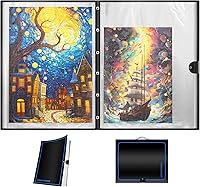
Its wood surface, 360-degree rotation, 4 sliding drawers and translucent cover bring the main work and storage tasks into one setup. That suits someone who pauses often and wants to return to the same organized project.
It also makes sense when several people work from different sides of a table. Turn the board slowly so nearby trays and objects stay clear of its corners.
The board leads this comparison because it combines sorting, reach and a cover. Those features earn their place only if you use them, so choose a mat when compact storage matters more.
Which roll-up mat suits your routine?
Choose Becko for bagged storage or Buffalo for a core that needs no inflation. Skip either mat if you want to stop and restart without wrapping your puzzle.
Becko includes an inflatable tube, 2 elastic bands and a drawstring bag. The bag has a hanging rope and a name-card slot, useful when several stored puzzles or hobby supplies share a space.
Choose it if the bag fits your storage routine and you are comfortable inflating the tube. Becko directs you to squeeze the valve to open its slit during inflation.
Buffalo uses thick felt, an expandable solid core reaching 34.5 in and 3 Velcro straps. It suits someone who wants to avoid maintaining an inflatable tube.
That core still requires careful rolling. Pick between these mats by the packing steps you prefer, rather than expecting either one to remove the need for careful handling.
How do you set up and pack away a puzzle mat?
Start with a clean table and a flat mat, then roll evenly around the prepared core when you stop. Keeping the mat smooth from the start makes the packing routine easier.
Spread it out fully before pouring out pieces. If it has folds or raised areas, smooth them according to the care instructions before assembling the border.
Keep the finished puzzle area clear of loose pieces as you work. At cleanup, put those pieces into separate containers and check that small joined groups are lying flat.
For Becko, prepare the inflated tube, position it at an end of the mat and roll with even pressure. For Buffalo, prepare the expandable core and follow its wrapping directions.
Guide the roll with both hands rather than pulling harder on one side. Secure the bands or straps as directed, without adding extra force to compress the puzzle.
Unroll slowly on the table at the next session. Check for shifted pieces before moving large sections; our guide to whether puzzle mats work explains more about this tradeoff.
How should you care for a board or mat?
Keep either surface clean, dry and free of crumbs. Dirt beneath the puzzle can create bumps, while moisture can damage cardboard pieces.
Remove the puzzle before cleaning the work surface. Use the care method allowed by the manufacturer, and let the surface dry fully before placing pieces back.
For a wood board, avoid soaking the surface or leaving it beside spills. Clear debris from drawer paths and the area around the rotating base so movement stays unobstructed.
For felt, lift away lint gently and avoid tools that snag the fibers. Follow its care instructions before washing, applying heat or using a cleaning solution.
Keep drinks on a separate surface when possible. Store the accessories together so a missing strap, tube or cover does not delay your next cleanup.
What mistakes should you avoid before buying?
The biggest mistake is buying for puzzle capacity without planning the full routine. Check how the surface fits, how you sort and where everything goes afterward.
Avoid these common mismatches:
- Measuring only the tabletop. Include drawer access, rotation clearance and the route to storage.
- Treating a mat as a rigid carrier. Support it on the table during assembly and use its core for storage.
- Expecting a cover to secure a tipped board. Keep the board level while moving it.
- Leaving all loose pieces on a mat. Separate them before rolling if you want to preserve sorted groups.
- Buying for an occasional large puzzle alone. Consider the size and cleanup needs of the puzzles you do most often.
If reaching across the table is your main concern, read about tilting versus rotating puzzle boards before choosing. A storage solution and a more comfortable working angle solve different needs.
Puzzle board vs mat: which should you choose?
Choose the ALL4JIG board if you have flat storage and want sorting drawers, rotation and a cover. Choose a mat if your main goal is reclaiming the table and storing the puzzle as a roll.
Between the mats, choose Becko when its bag suits your storage spot. Choose Buffalo when you prefer a solid core that does not need inflation.
Make the final puzzle board vs mat decision by walking through one cleanup: gather the loose pieces, secure the project and picture carrying it to its storage spot. The better choice is the one that fits that routine every time you stop.
If the missing piece is a dedicated place to work, read puzzle table or puzzle board: which should you buy? next.
Frequently asked questions
Is a puzzle board better than a mat?
A puzzle board is better for a firm work surface and moving a project without rolling it; a mat is better when you lack a flat storage spot but can store a roll. Choose around your daily clearing routine, then check puzzle dimensions and room for sorting.
Can a puzzle mat keep pieces in place?
Felt helps resist sliding during assembly, but pieces can shift when you roll or unroll a mat; use a smooth surface underneath, roll evenly around the core and secure it as directed. Our guide to whether puzzle mats work explains when that storage routine makes sense.
Can you roll up a puzzle with loose pieces?
Store loose pieces separately if you want to preserve your sorting groups and reduce movement inside the roll; put them in trays or containers before wrapping the joined sections. A board with drawers offers another approach; our puzzle sorting trays guide explains how to organize pieces before clearing the table.
What size puzzle mat or board should you get?
Choose a usable surface larger than your puzzle's finished dimensions, with extra room if you sort on the same surface; piece count alone cannot confirm the fit because puzzle shapes and piece sizes vary. Our puzzle table size guide explains how to measure your full working area.
How do you store an unfinished puzzle?
Store an unfinished puzzle on a covered, level board or roll it carefully around a mat's core; keep loose pieces contained and choose a dry spot protected from bumps, pets and spills. See how to store unfinished puzzles for ways to match storage to your room and project.