How to Use a Puzzle Board: Tilt, Rotate and Cover
Here's how to use a puzzle board: start flat on a stable table, sort your pieces, then adjust the angle and position as needed. Turn slowly to bring sections closer, and lower the board before covering or moving an unfinished puzzle.
On this page (8 sections)
- How do you set up a puzzle board?
- How do you adjust the tilt?
- How do you rotate a puzzle board?
- How do you sort pieces while using the board?
- How do you cover and store an unfinished puzzle?
- How do you clean and care for a puzzle board?
- What mistakes should you avoid when using a puzzle board?
- How should you choose and use your puzzle board?
To learn how to use a puzzle board, start flat on a steady table, sort your pieces, and adjust the tilt only after checking that they stay put. Rotate slowly to bring distant sections closer, then lower the board before covering or moving it.
The right setup leaves room for the finished puzzle, sorting drawers, and your hands. If you're choosing your first board, our complete guide to puzzle tables and boards explains the main options.
How do you set up a puzzle board?
Set the board on a level, sturdy table that supports its base, with enough room to open drawers and turn the surface. Check this space before emptying the puzzle box.
A rectangular board needs more clearance during rotation than when it sits square to the table. Turn the empty board through its full movement and check for walls, lamps, chair backs, and nearby objects.
Read the puzzle's finished dimensions and compare them with the usable assembly area. A piece-count label is only a starting point because puzzles with the same count can have different shapes and sizes.
Leave some space around the border for moving sections into place. Our guide to choosing a puzzle table size for a 1,500-piece puzzle explains how to check the fit.
Sit close enough to reach the near edge without leaning forward. Keep the reference image upright nearby and position your light so your hands don't cast shadows over the section you're building.
Which puzzle board should you choose?
Choose by puzzle fit, surface material, and how often you'll move it. Tilt helps change your viewing angle, while rotation brings another part of the puzzle within reach.
The WELGEE suits people who want a wipe-clean plastic surface or plan to glue finished puzzles on the board. Its warm-white work area also gives pieces a light background.
WELGEE permits direct gluing on its waterproof surface, so this is the clearest choice here for that use. Skip it if your priority is a fabric work surface for regular tilted assembly.
If you'll leave the board flat most of the time, buy for size and storage first. Movement features won't help if the puzzle doesn't fit or the board has nowhere to go between sessions.
How do you adjust the tilt?
Raise the board one small step at a time, using its built-in supports as directed. Stop at the lowest angle that improves your view without making pieces slide.
Start with a few loose pieces near the center before spreading out the whole puzzle. Check several shapes, since a large joined section and a single loose piece may behave differently.
Keep fingers clear of hinges and make sure the support is fully seated before releasing the surface. Adjust your chair as well, since a steeper board isn't always a more comfortable setup.
How to use a puzzle board at an angle
Keep loose pieces in drawers and bring only the group you're working on onto the tilted surface. This leaves fewer pieces to manage if you need to change the angle.
The Playboda is a good fit for people who expect to work tilted often and prefer a felt surface. Its ABS construction offers a different material choice from the wooden boards below.
Playboda describes the felt as non-slip, but choose the angle by how your pieces behave. Skip this model if direct gluing and quick wipe-down cleaning are your main reasons for buying a board.
For broad areas such as sky or water, assemble small groups flat before raising the surface. Don't use joined pieces as a barrier to catch loose ones sliding downhill.
How do you rotate a puzzle board?
Rotate by gently turning the frame, keeping your other hand clear of the base. Bring the next work area toward you instead of reaching across completed sections.
Close drawers before turning and clear anything that could catch a corner. Use short movements so you can stop before the board meets an obstacle.
The ALL4JIG 1500 Tilt and Rotate Board suits people who prefer pine construction and want a choice of 3 tilt angles. Its Oxford cloth surface is intended to grip pieces during inclined work.
Check its usable surface carefully if your puzzle is close to the board's size limit. Skip it if you want to glue directly onto a bare plastic work area.
Rotation also helps when 2 people share a puzzle: agree before turning so neither person is placing a piece. Keep the reference image separate so it remains easy to read from your seat.
Read tilting or rotating puzzle boards: which is better to decide which movement matters more. Our guide to rotating puzzle boards covers choices focused on easier reach.
How do you sort pieces while using the board?
Sort into a few useful groups, leaving the main surface clear for assembly. Start with edges, then separate distinct colors, textures, or objects from the picture.
Use each drawer for a group you can recognize at a glance. When one color fills a drawer, divide it further by shape or light and dark areas instead of piling pieces deeply.
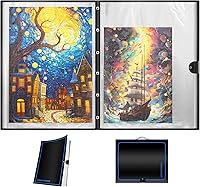
The ALL4JIG 1500 Tilt and Spin Board suits people who want a wooden board with sorting storage and a carry handle for occasional moves. Its Oxford cloth surface and translucent cover support a setup you can leave between sessions.
At 5.9 kg before adding the puzzle, this model deserves extra thought if you'll carry it daily. Skip it if carrying weight is your main concern, or choose a storage spot beside the table to limit lifting.
Leave enough clearance for drawers to open without hitting your lap. If you need more sorting space, our guide to sorting puzzle pieces with trays explains how to split large groups.
Compare covers and storage layouts in our guide to puzzle boards with covers and storage features. Drawers help organize pieces, but they shouldn't become packed bins that hide everything underneath.
How do you cover and store an unfinished puzzle?
Flatten the board and settle every piece before placing the cover. Lower it gently rather than dragging it across the puzzle.
Move pieces away from the rim and check for overlapping sections that could catch underneath. A cover helps shield the work from dust and casual contact, but it isn't a reason to stack heavy objects on top.
Close drawers and support the board with both hands when carrying it. Drawer retention doesn't mean the unfinished puzzle can travel vertically without shifting.
Measure the full stored height, including the base and cover, before choosing a space under furniture. Keep the board dry, level, and easy to retrieve without pulling it by a drawer handle.
For longer breaks or a move to another room, see how to store finished or unfinished puzzles. Plan the route before lifting, especially around narrow doors and furniture.
How do you clean and care for a puzzle board?
Remove pieces before cleaning, and match the method to the surface. Clear crumbs, dust, and lint gently so they don't collect beneath the puzzle.
Wipe WELGEE's plastic surface with a damp cloth, then let it dry before starting again. For felt or Oxford cloth, use gentle dry cleaning first and follow the board's care instructions before adding moisture.
Avoid soaking fabric or leaving wooden parts damp. Keep glue away from drawers, hinges, and the rotating base, even on a board that allows glue on its work surface.
Store the cover flat when practical so it stays easy to position. Before each session, check that supports are seated and no loose piece has fallen into the moving parts.
What mistakes should you avoid when using a puzzle board?
Avoid crowded surfaces, forced adjustments, and unsupported lifting. Most setup problems are easier to prevent while the board is empty.
Don't choose a board by piece count alone, turn it with drawers extended, or force a tilt support while pieces are sliding. Pause, clear the obstruction, and reset the board.
Keep drinks on a separate surface, including when a cover is fitted. A covered puzzle still needs a dry storage spot and protection from pets climbing onto it.
Leave yourself a clear place to put the board before carrying it. Trying to clear a shelf while holding a loaded board makes a simple move much harder.
How should you choose and use your puzzle board?
Choose WELGEE for wipe-clean assembly and direct gluing, or Playboda for felt-covered tilted work. Choose the ALL4JIG Tilt and Rotate for its 3 tilt settings, or the Tilt and Spin if a carry handle matters and its weight suits you.
Learning how to use a puzzle board starts with matching it to your room and routine. Measure your puzzle, check turning clearance, and decide where the covered board will rest before choosing extra features.
If changing the viewing angle is your main need, compare the best tilting puzzle boards next. Pick a board you can comfortably set up and put away each time.
Frequently asked questions
How do you keep puzzle pieces from sliding on a tilted board?
Use a shallow angle and a surface designed to grip pieces. Begin with a few loose pieces near the center, raise the board gradually, and stop if they drift.
Keep loose pieces away from the edges, and lower the board before moving it or leaving it unattended.
Should you rotate a puzzle board while it is tilted?
Rotate a tilted board only when its instructions allow both movements together. Close the drawers, clear the turning path, and move the board slowly by its frame rather than pushing puzzle pieces.
If the base rocks or pieces shift, return the surface to flat before turning it again.
How do you cover an unfinished puzzle?
Lower the board flat, move loose pieces away from the edges, and lower its cover gently into place. Avoid sliding the cover across raised tabs or partly joined sections.
Close the drawers before moving the board, support it with both hands, and keep it horizontal unless its instructions allow otherwise.
Can you glue a puzzle on a puzzle board?
Glue directly on a board only when its surface is suitable and the glue instructions allow it. WELGEE permits direct gluing on its waterproof plastic surface.
For fabric-covered boards, transfer the puzzle to a suitable backing or use a protective barrier approved for the task so glue cannot soak into the cloth.