What Is a Puzzle Easel, and What Does It Hold?
A puzzle easel supports a jigsaw puzzle on a raised or tilted work surface while you assemble it. Choose by your puzzle's finished dimensions, your preferred working angle, and how you'll store unfinished work.
On this page (7 sections)
A puzzle easel supports a jigsaw puzzle at a raised or tilted angle, bringing the image toward you as you work. Some designs also rotate, cover unfinished work, or hold loose pieces in separate trays.
Choose one by matching the puzzle's finished dimensions first, then deciding how you'll reach, sort, and store it. A large board won't solve a poor table setup, and a steep tilt isn't automatically more comfortable.
What is a puzzle easel?
A puzzle easel combines a puzzle board with a support that raises or angles it. Most tabletop designs still need a stable table beneath them; the stand doesn't replace a full-height table.
The angle changes how you see the image and reach across the board. It can make distant sections easier to view, but raising the far edge too much can leave your arms working higher than you prefer.
Our puzzle tables and boards buying guide explains the broader choices. An easel suits someone who already has a suitable table and wants to change the working position.
What does a puzzle easel hold?
A puzzle easel holds the assembled sections and loose pieces that fit within its work area. Separate trays add sorting space, while a cover shields the surface between sessions.
Measure for the finished puzzle, not just the pieces you've connected so far. You'll need enough room to complete the border without moving part of the puzzle onto another surface.
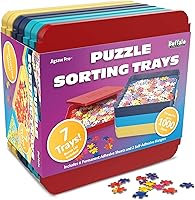
Loose pieces compete with the puzzle for space if you sort directly on the board. Once the border fills most of the surface, separate trays become more useful than extra tilt settings.
Jigpal: a puzzle easel for sorting and covered storage
The Jigpal Felt Tilting Board suits puzzlers who sort into groups and put unfinished work away. It includes 6 trays, raised edges, and a felt surface, with a weight of 3.6 lb.
Its support also serves as a cover, and the stand offers angles of 18°, 23°, and 28°. You'll change between those two uses when opening or closing the setup.
Choose it if you want a covered board and separate sorting space in one package. Skip it if your puzzle exceeds the usable area or you want a rotating base.
Keep only the group you're working on beside the board to avoid crowding your reach. Our guide to puzzle sorting trays explains ways to divide pieces by color, shape, and image section.
How is a puzzle easel different from a flat puzzle board?
A puzzle easel adds an angled working position; a flat board mainly provides a movable surface for keeping the puzzle together. Tilt helps with viewing, while rotation changes which section is closest to you.
A flat board may suit you better if you often work from opposite sides with another person. An easel favors a working side, so everyone should try their seat position before you commit to a shared setup.
For positioning advice, read how to use a puzzle board to tilt, rotate, and cover a puzzle.
Bits and Pieces: for turning larger puzzles toward you
The Bits and Pieces Deluxe Easel Board suits puzzlers who want both tilt and rotation. Its swivel base lets you bring another section closer without reaching across the whole puzzle.
The pine board has a 24 x 34 in puzzle area for puzzles up to 1,500 pieces, plus a protective cover. It folds to 35 1/2 x 26 3/8 x 4 in and has a carrying handle.
Choose it for a regular puzzling spot where you can leave room around the board to turn it. Skip it if your storage slot is narrow or you need something light for frequent carrying; it weighs about 20 lb.
Check the full turning path before placing drinks, lamps, or sorting trays nearby. A board can fit a tabletop when still yet catch nearby objects as it rotates.
Which puzzle easel features should you choose?
Choose tilt for viewing, rotation for reach, and a cover for breaks between sessions. Storage size and carrying weight matter most when the dining table has to return to everyday use.
Don't pay attention only to the steepest angle. A lower setting may let you see the whole image while keeping your shoulders relaxed and your forearms near the table.
WELGEE: for frequent moves and a wipe-clean surface
The WELGEE 1000 Tilting Board with Stand suits people who move their setup between rooms. Its ABS plastic construction weighs 3.5 lb, and the work area measures 31 x 24 in.
You build the board from 6 modular panels using locking pins, then add the detachable support for tilted use. Assemble it on an empty, level surface and check every connection before adding pieces.
Choose it if low carrying weight and an easy-to-wipe surface are priorities. Skip it if you want a one-piece board with no panel assembly.
Keep snacks and drinks on a separate surface even with a wipe-clean board. The puzzle itself still needs protection from spills.
Tektalk: for switching between smaller and larger puzzles
The Tektalk Foldable Easel Board suits puzzlers who alternate between puzzle sizes and need compact empty-board storage. It pairs a foldaway felt board with a pine stand offering 3 angle settings.
The board measures 30.7 x 22.4 in unfolded. It accommodates most 500-piece puzzles folded and most 1,000-piece puzzles unfolded, with the complete side used for the larger puzzle.
Choose it if that smaller working format will be useful between larger projects. Skip it if you expect to fold a full-width unfinished puzzle down the middle without disturbing it.
A folding board saves space when empty, but an assembled puzzle still needs support across its full width. Plan to store a larger unfinished project flat rather than treating the fold as a way to shrink it.
Covers protect the surface between sessions
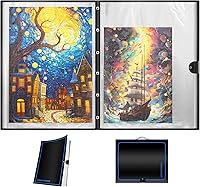
A cover is useful when dust or household activity makes an exposed puzzle impractical. It doesn't turn a board into a sealed carrying case or make it suitable for stacking heavy objects.
Our guide to puzzle boards with covers explains which cover features matter. Keep the cover clean underneath so debris doesn't press against the puzzle.
How do you choose the right puzzle easel size?
Choose a usable work area that exceeds both finished puzzle dimensions. Piece count is a starting point, because square, panoramic, and large-piece puzzles can have different proportions.
Check these measurements before ordering:
- Puzzle length and width: Use the finished dimensions printed on the box.
- Usable board area: Edges and framing can reduce assembly space.
- Open footprint: Allow room for the support, your hands, and any trays.
- Storage clearance: Measure the full route and space where the board will rest.
A close fit can work if you sort elsewhere, but it leaves little room to move loose groups around the border. For more sizing help, see how to match a puzzle table to a 1,500-piece puzzle.
Choose the storage location before starting a large project. These puzzle table ideas for small rooms can help you find a place that doesn't block everyday use.
How should you set up and care for a puzzle easel?
Start on a stable, level table with the stand fully engaged, then use the lowest tilt that gives you a clear view. Bring your chair close enough that you aren't reaching forward throughout the session.
Place a few loose pieces and a connected section on the surface before arranging the whole puzzle. If either shifts, reduce the angle and keep loose pieces in trays.
Return the board to level before moving unfinished work, and support it from below with both hands. Clear the route first so you won't need to open a door or move a chair while carrying it.
Remove puzzle dust between projects with a soft brush suitable for the surface. Wipe plastic with a lightly damp cloth, avoid soaking felt or wood, and let everything dry before replacing pieces or the cover.
Change position and take short breaks during longer sessions. An adjustable board gives you options, but it can't compensate for a chair or table that puts the work too high.
Which puzzle easel should you choose?
Choose your puzzle easel around the task you repeat most often. Daily carrying, reaching across a large image, and putting work away each call for different features.
- Choose Bits and Pieces if turning sections toward you matters most and you have room for its larger setup.
- Choose WELGEE if you move the board often and prefer a wipe-clean plastic surface.
- Choose Jigpal if separate sorting trays and covered storage fit your routine.
- Choose Tektalk if you want a foldaway board for alternating between smaller and larger puzzles.
Keep a flat board if you already reach comfortably and won't use a stand. Our puzzle table or puzzle board comparison can help if you're still deciding on the basic format.
Before starting, decide exactly where the unfinished puzzle will go after each session. Follow our guide to how to store unfinished puzzles to make that part of the setup as practical as the working angle.
Frequently asked questions
What does a puzzle easel hold?
A puzzle easel supports an unfinished jigsaw puzzle, plus loose pieces if there is spare surface space. Some models include separate sorting trays or a cover for breaks between sessions; match the usable work area to your puzzle's finished length and width before choosing one.
Is a puzzle easel the same as a puzzle board?
A puzzle easel is a board-and-support setup that raises or tilts the puzzle toward you. A basic puzzle board can stay flat without a stand; some easels work in both positions, so choose by the angle, support, and storage features you need rather than the name.
Can a puzzle easel hold a 1,000-piece puzzle?
Many puzzle easels fit standard 1,000-piece puzzles, but finished dimensions decide whether yours fits. Panoramic, square, and unusually large-piece puzzles may need a different surface; compare both dimensions with the usable area, then allow spare space if you want to sort pieces around the puzzle.
Does a puzzle easel keep pieces from sliding?
A textured surface can help limit sliding, while raised edges help catch pieces near the board's boundary. Neither feature secures every loose piece during movement; start at the lowest angle, watch for shifting, and return the board to a level position before carrying unfinished work.